Free shipping on orders over $99. Shop now

Vanishing Spray in Soccer: How Referees Use It During Free Kicks

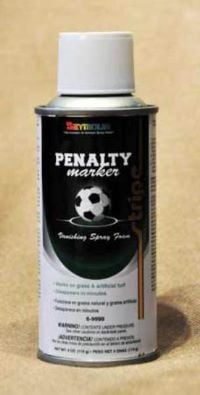
A free kick can turn tense in seconds. Players want the right spot, defenders want enough space, and the referee needs to keep things moving. That is where vanishing spray comes in. The temporary foam gives the referee a quick way to mark the ball and the distance for the defensive wall.
What Does Vanishing Spray Do During a Free Kick?
Vanishing spray helps the referee show two important points during a free kick: where the ball should go and how far the defending wall must stay away.
Under Law 13, opponents generally need to stay at least 9.15 meters, or 10 yards, from the ball until the kick puts the ball into play.
That sounds easy enough. But picture a crowded free kick just outside the penalty area. Several defenders stand together. Attackers move around them. Everyone watches the referee.
Without a clear mark, players can slowly creep forward.
The spray gives the referee a simple visual reference. It does not create a new rule. Instead, it helps everyone see where the existing rule applies.
The Referee Controls the Setup
The referee first decides where the foul occurred and where the restart should happen. Then, when temporary marking spray is part of the match setup, the referee can mark the needed positions.
A typical sequence looks like this:
- The referee identifies the restart spot.
- The ball goes on that spot.
- The referee marks the required distance for the defenders.
- The defensive players form their wall.
- The referee checks the positions.
- The kick takes place.
This can save time when players question the distance.
It also gives the referee a cleaner way to manage a crowded situation. Instead of repeatedly telling players to move back, the referee can point to the mark and make the required space easy to see.
Why Is the 10-Yard Distance So Important?
The 10-yard rule gives the attacking team room to take the free kick without the defensive wall crowding the ball.
Even a small difference can matter. A wall that moves closer can block more of the goal and reduce the space available to the attacking team.
There is another detail that often gets overlooked. When three or more defenders form a wall, attacking players must stay at least 1 meter, or 1 yard, away from that wall until the ball enters play.
So, the referee may need to manage both sides of the setup, not just the defenders.
The spray helps make those boundaries easier to understand at a glance.
What Happens to the Mark After the Kick?
The foam does not serve as a permanent field line. It is designed to create a short-term mark and then fade.
The exact fading time can vary. Weather, moisture, grass conditions, and the product itself can affect how long the mark remains visible.
That difference matters.
A soccer field needs regular field lines for boundaries, penalty areas, center circles, and other markings. Those lines serve the whole match and need to stay visible.
A referee’s spray has a much narrower job. It marks a specific situation and then gets out of the way.
Vanishing Spray Is Not Regular Field Marking Paint
It is easy to confuse the two because both products can create visible marks on a soccer field.
Their jobs, however, are different.
Vanishing spray is used for short-term match situations, such as showing free-kick positions and defensive distance.
Field marking paint serves a different purpose. Grounds crews use it to create the lines that define the playing field and its key areas.
A grounds crew may use marking equipment before a game to prepare the field. A referee may use temporary spray during the game to manage a free kick.
Using the right product for the right job keeps field maintenance much simpler.
How Should Referees Use the Spray?
The biggest mistake would be treating the spray as a replacement for good officiating.
The referee still needs to understand the Laws of the Game, identify the correct restart spot, and watch player movement.
The spray simply makes those decisions easier to communicate.
A good approach is to:
- Mark only what the situation requires.
- Keep the mark easy for players to see.
- Check that defenders respect the required distance.
- Watch attackers around the defensive wall.
- Avoid delaying the restart longer than needed.
The goal is not to cover the grass with foam. The goal is to settle the setup quickly and get the game moving again.
Match-Day Equipment Goes Beyond the Referee’s Spray
A well-run soccer field needs more than a referee’s match-day tools.
Clubs, schools, recreation programs, and soccer facilities also need equipment that helps them set up, move, and store their goals.
That can include:
- Portable soccer goals
- Replacement nets
- Goal wheels
- Anchors
- Net fasteners
- Training equipment
- Goal bags
- Other goal accessories
For teams that move equipment between fields, storage and transport can become a real headache. The right accessories can make that job easier and help keep equipment together between sessions.
The same practical thinking applies to temporary field equipment. Every item should have a clear job rather than simply taking up space in the equipment room.
What Should You Know Before Using Vanishing Spray?
Vanishing spray may look simple, but the match rules still come first.
Not every soccer competition uses the same equipment or procedures. Referees and organizers should follow the rules that apply to their competition.
It is also smart to check the product instructions before using a particular spray. Field surfaces can differ, and products can behave differently depending on grass, moisture, and weather.
Most importantly, temporary spray should support the referee rather than slow the match down.
Key Takeaways
A free kick may last only a few seconds, but the setup can affect what happens next. Vanishing spray. gives referees a simple way to show the required space and keep players from crowding the restart. The bigger lesson is just as practical: good field equipment should make the job easier, not harder.
Fold – A – Goal supplies soccer goals, nets, goal accessories, and related field equipment for clubs, schools, facilities, and other soccer organizations. From portable goals to everyday field gear, wehelp teams build a practical setup for training, matches, and tournaments.
Frequently Asked Questions
1. Why do referees use vanishing spray during free kicks?
Referees use it to mark the ball position and show defenders where the required distance begins.
2. How far must a defensive wall stand from the ball?
Defenders generally must stay 9.15 meters, or 10 yards, from the ball until it enters play.
3. Does vanishing spray leave a permanent mark on soccer fields?
No. It creates a temporary mark that fades, although weather and field conditions can affect how quickly it disappears.
4. Is vanishing spray the same as soccer field marking paint?
No. Vanishing spray handles temporary match situations, while field paint creates lasting lines for the playing surface.
5. Can attacking players stand close to a defensive wall?
No. When three or more defenders form a wall, attackers must stay at least 1 meter away until play resumes.